Geumosan Hiking Guide: Cable Car and Confucian Heritage
A practical guide to hiking Geumosan Provincial Park — Korea's first provincial park (1970), with cable car, Daehye Waterfall, and cliffside Haeunsa Temple.
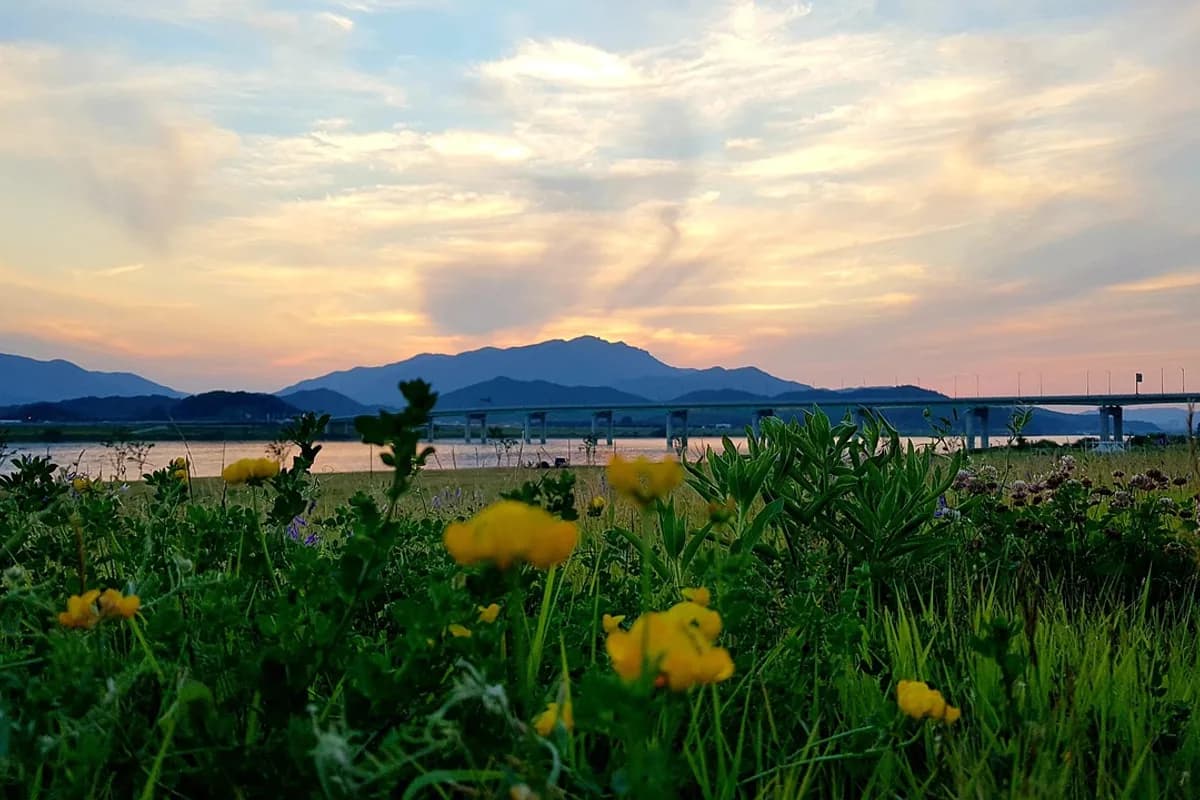
Geumosan is the mountain that introduced the provincial park category to Korea. When the government established the country's first provincial-park designation in 1970, Geumosan was the first mountain to receive it — a tier below national park but with comparable infrastructure, protection, and visitor facilities. Sitting on the boundary between Gumi and Gimcheon in North Gyeongsang Province, the mountain rises to 976.5 meters at its main summit, Hyeonwolbong, and compresses three layers of Korean history — Silla-era Buddhism, Joseon-era Confucianism, and twentieth-century tourism infrastructure — into a 30-square-kilometer park accessible in 15 minutes by taxi from Gumi Station.
The name Geumosan means "Golden Crow Mountain" (金烏山). It comes from Doseon Guksa (827–898), the Silla-era Buddhist monk and founder of Korean geomancy, who is said to have read the mountain's spiritual energy (地脈) and declared that the spirit of a golden crow dwelled here. Doseon founded the original temple on the mountain — today's Haeunsa — after reaching enlightenment in a cave on the cliff face that still bears his name: Doseongul, the Doseon Cave. The cave, the cliff-bound temple, and the nearby Yaksaam hermitage with its rock-carved stone Buddha (Naeml-yeocho, late Silla to early Goryeo) form a loose Buddhist triad around the mid-mountain elevation.
Five hundred years after Doseon, the Joseon-early scholar Gil Jae (1353–1419) chose the same Doseon Cave as his retreat. Refusing to serve the new Joseon dynasty after the fall of Goryeo — a principled stand known as the "Two Dynasties Cannot Be Served" doctrine — Gil Jae returned to his home region of Seonsan (modern Gumi), withdrew to Geumosan, and spent his last decades teaching. His students' students included Kim Jong-jik, Jeong Yeo-chang, and Kim Goeng-pil, and his teaching line runs forward into the Sarim, the reformist Confucian scholar class that dominated mid-Joseon intellectual life. The Geumo Confucian Academy (금오서원) was built in 1572 to honor him and received royal charter in 1575. The nearby Chaemijeong Pavilion (채미정), built in 1768, commemorates him with a name borrowed from a classical Chinese fidelity story — "gathering ferns," a reference to scholars who would rather eat mountain ferns than serve an illegitimate ruler.
Modern access is straightforward. Gumi Station on the KTX line puts the mountain 15 minutes from a bullet train. The 805-meter cable car, installed in 1974, climbs from valley level to the Haeunsa ridge in 6.5 minutes and drops the summit approach from a full 750-meter climb to a moderate 550-meter walk. For travelers approaching from Daegu (one hour) or Seoul (two and a half hours by KTX), Geumosan is one of the most accessible serious hikes in the country.
Quick Info
Quick summary for planning your Geumosan hike at a glance.
- Location: Gumi-si & Gimcheon-si, Gyeongsangbuk-do (North Gyeongsang Province)
- Main Summit: Hyeonwolbong, 976.5m
- Mountain Range: Sobaek
- Park Designation: Korea's 1st Provincial Park (1970)
- Park Area: ~30 km²
- Cable Car: 805m length, 6.5-minute ride (~₩6,000–8,000 round trip)
- Signature Features: Daehye Waterfall (27m), Haeunsa cliff temple, Doseon Cave, Yaksaam rock-carved Buddha, Geumo Confucian Academy, Chaemijeong pavilion
- Difficulty: Easy (cable car + Haeunsa area) to Moderate–Hard (Male Rock ridge traverse)
- Best Time to Visit: September–October (stable weather, autumn foliage), April–May (azaleas, greenery)
- Entrance Fee: Park free; cable car ticketed
- Travel Time from Seoul: ~2.5h by KTX + taxi
- Travel Time from Daegu: ~1h by car
Trail Overview
| Trail | Distance | Elevation Gain | Time | Difficulty | Best For |
|---|---|---|---|---|---|
| Cable Car + Summit | ~5km | +~400m (above cable car) | 2.5–3h | Easy–Moderate | First-time visitors, mixed groups |
| Cultural Heritage Circuit | ~8km | +~600m | 4–5h | Moderate | Temples, Doseon Cave, Haeunsa |
| Fortress + Male Rock Ridge | ~7–8km | +~600m | 3.5–4.5h | Moderate–Hard | Rock traverse, chain sections |
| Full Reverse Descent Loop | ~10km | +~750m | 4.5–5h | Hard | Full mountain, all sites |
| Chaemijeong + Reservoir Walk | ~2km | Minimal | 30–60min | Very Easy | Confucian heritage, families |
Why Geumosan Is Korea's First Provincial Park
The distinction matters because it set a template. When Jirisan was designated Korea's first national park in 1967, the government created the top conservation tier; when Geumosan was designated the first provincial park three years later, in 1970, it created a second tier — protected status administered at the provincial (도) rather than national level. Today, Korea has 30 provincial parks and 22 national parks. Geumosan was the prototype for everything that followed in the provincial tier.
The physical reason for the designation is compressed and legible. Within a 30-square-kilometer boundary, Geumosan contains sharp granite cliffs (Jurassic diorite and granite bedrock, roughly 180 to 150 million years old), a 27-meter waterfall (Daehye, also called Myeonggeum — "Ringing Gold"), a cluster of centrally important religious sites (Haeunsa, Doseongul, Yaksaam), a Confucian heritage complex (Geumo Seowon, Chaemijeong), and one of the earliest examples of Korean tourism infrastructure (the 1974 cable car). Nothing about this is hidden or difficult to reach.
The granite is central to the visual identity. Jurassic-era plutonic intrusion left the mountain with sharp vertical jointing that produced cliff faces 200 to 400 meters tall in the upper sections. Differential erosion along the joint planes created the characteristic landscape of steep walls cut by narrow valleys. Daehye Waterfall tumbles 27 meters down one of these cliff joints. Male Rock (Namgeunbawi) is a solitary granite pinnacle on the ridge, formed when surrounding softer rock eroded away faster than the joint-bounded core.
The cultural density is what distinguishes Geumosan from most accessible mountains. Doseon Guksa founded the original temple here in the ninth century, reportedly after his enlightenment in the cliff cave. Gil Jae — Ya-eun, the "Hermit of the Fields" — retreated to the same cave after refusing service to the new Joseon dynasty in 1400, and his teaching line became the Sarim scholar movement that shaped mid-Joseon Korea. The Chaemijeong pavilion honors him specifically; the Geumo Confucian Academy was dedicated to his memory. This is a rare Korean case where Buddhist and Confucian heritage literally overlap on the same mountain and frequently on the same physical sites.
For comparison, Jirisan is the mainland's highest summit. Sobaeksan is the national park immediately north with the royal azalea ridge. Hwangmaesan is the accessible plateau with azaleas and silver grass. Geumosan occupies a specific niche: Korea's first provincial park, the most culturally layered of the day-hike mountains, and the most infrastructure-rich access near Daegu and the KTX line.
Difficulty and Time Required
Geumosan is a mountain the cable car redefines. The 805-meter ride from valley level to the Haeunsa area cuts the summit approach from a full 750-meter climb to a more manageable 550 meters. Without the cable car, a round-trip summit is a serious day. With the cable car, it is a 2.5 to 3-hour outing well within the range of moderately fit walkers.
The cable car + summit route is the dominant choice by visitor volume. From the upper cable car station at approximately 400 meters, the path climbs past Haeunsa and Yaksaam to the Hyeonwolbong summit in roughly 1.5 hours, with stone steps and stairs on most sections and a final rocky scramble near the top. Round trip 2.5 to 3 hours, 5 kilometers, 400 meters of gain above the cable car station. Rated easy to moderate.
The Cultural Heritage Circuit (Doseongul → Haeunsa → Yaksaam → summit) adds the cave detour to the main route and runs 4 to 5 hours over roughly 8 kilometers. Bring a headlamp or flashlight — the cave entrance is natural and its lighting is not artificially maintained. Rated moderate.
The Fortress Ruins + Male Rock ridge is the serious route. From the main parking lot, a 7 to 8-kilometer traverse climbs to the partially restored Geumosan Fortress (Goryeo to early Joseon era), then continues up the ridge to Male Rock — a distinctive granite pinnacle requiring handrail and chain sections with real vertical exposure — and connects to the main summit. 3.5 to 4.5 hours, 600 meters of gain, rated moderate to hard. Not recommended in rain, ice, or high wind. The chain sections are short but exposed.
The full reverse descent loop combines the Male Rock route up with the Haeunsa route down (or vice versa) and the cable car on either end, giving approximately 10 kilometers over 4.5 to 5 hours. This is the full-experience option for hikers who want everything in one day.
Chaemijeong pavilion and the Geumosan reservoir shoreline together make a very easy separate 30-to-60-minute walk at the base — flat, paved, historically rich, and ideal for an afternoon or for visitors who prefer not to climb at all.
Trail Options
Cable Car + Summit — The Standard Day Hike
From the main parking lot, the 15-minute walk to the visitor center and then to the cable car lower station is paved and easy. The cable car ride is 6.5 minutes — an 805-meter climb to the upper station near the Haeunsa temple complex at approximately 400 meters elevation. The ride gives views over the valley, the fortress ridge, and the main granite cliff faces.
From the upper station, the hiking trail climbs toward Yaksaam hermitage and then up the switchback stone-step sections to the Hyeonwolbong summit. Views from Daehye Waterfall appear along the way (the falls are off-trail but visible from marked viewpoints). The final 100 meters are rockier with some use of hands on steeper sections.
Summit panoramas include Gumi to the east — on clear days Daegu is visible — the Sobaek ridges to the west and north, and the Gimcheon valley and reservoir to the south. Descent is either by the same route (1.5 hours) or via the Haldak-gogae alternate trail back to the cable car station (1.5 hours).
Best for: First-time visitors, mixed-fitness groups, visitors with limited time, photography-focused hikes, anyone wanting a summit without the full-valley climb.
Cultural Heritage Circuit — Doseon Cave to Summit
A longer route built around the mountain's three Buddhist sites. From the parking lot, climb the fortress approach for 20 minutes, then split off toward Doseon Cave — roughly 50 minutes of mixed forest and rock path. The cave is natural, expanded by human use over centuries, approximately 20 to 30 meters deep. Flashlight required. The floor is uneven and the ceiling low in places; watch footing and head clearance.
From Doseon Cave, descend 20 minutes to Haeunsa Temple on the cliff — architecturally dramatic and still an active small Buddhist community. The temple welcomes respectful visitors; small donation is customary but not required. From Haeunsa, a 15-minute lateral traverse reaches Yaksaam, the rock-carved stone Buddha hermitage from the late Silla to early Goryeo period. From Yaksaam, the path joins the main summit trail for the final hour to Hyeonwolbong.
Descent via the cable car from Haeunsa shortens the total to roughly 4 hours. Full pedestrian descent via Haldak-gogae adds 1 to 1.5 hours.
Best for: Hikers interested in Korean Buddhist history and geomancy, pilgrimage-style visits, full-mountain heritage days, photographers drawn to rock-carved Buddhist iconography.
Fortress Ruins + Male Rock Ridge — The Rugged Traverse
The more serious route. From the parking lot, climb to the partially restored Geumosan Fortress in about 1 hour — walls dating to Goryeo through early Joseon, with foundation stones and moss-covered sections visible throughout. From the fortress, the ridge steepens significantly toward Male Rock.
Male Rock (Namgeunbawi) is a vertical granite pinnacle with chain and rope sections. Approximately 200 meters of exposure on the climb up. Hand use required. Not recommended for hikers uncomfortable with heights, and not recommended in rain, ice, or high wind — the chains can be slick, and footholds are less forgiving when wet.
From Male Rock, the ridge continues 1 hour 20 minutes to Hyeonwolbong summit with repeated ups and downs, exposed sections, and consistent wind. Sparse alpine grassland vegetation. Descent via Haeunsa and the cable car cuts roughly 1.5 hours off the full return.
Best for: Experienced day hikers, rock-scramble enthusiasts, photographers drawn to distinctive rock formations, hikers seeking the most physical of the day routes.
Chaemijeong + Reservoir Walk — The Confucian Heritage Base Loop
Not a hike. A flat 30-to-60-minute walk at the base of the mountain connecting the Chaemijeong pavilion (1768) with the Geumosan reservoir shoreline and — with a short additional drive — the Geumo Confucian Academy (1572, royal charter 1575).
Chaemijeong is a traditional Joseon-era pavilion built to honor Gil Jae's fidelity. The name — "Picking Ferns" — references a classical Chinese story of two scholars who retreated to Shouyang Mountain rather than serve the new Zhou dynasty, eating ferns until they died. The pavilion structure is modest: a raised wooden hall with a tiled roof, sitting on stone foundations near the reservoir. The surrounding grounds are landscaped in Joseon style with walking paths.
The Geumo Confucian Academy sits at the base of the mountain — a short drive from the park entrance — with lecture hall, dormitories, and the shrine building dedicated to Gil Jae. Spring and autumn ceremonial rites (chunchu-hyangsa) are still held.
Best for: Cultural tourism, elderly travelers, families with young children, non-hikers, rainy-day alternatives, visitors combining Geumosan with a broader Gumi-area heritage itinerary.
Best for Most Travelers
If you have three hours: cable car up, summit via Haeunsa, cable car down. The classic Geumosan visit and the reason most people come.
If you have a full day: Cultural Heritage Circuit. Doseon Cave, Haeunsa, Yaksaam, summit — Korea's cultural layering on a single mountain.
If you want a real climb: Fortress Ruins + Male Rock ridge. The most physical route, with chain sections and exposed rock. Match this to good weather.
If you are not hiking: Chaemijeong + Geumo Confucian Academy. A flat 60-to-90-minute heritage walk at the base, with the reservoir and pavilion.
If you are with children or elderly visitors: cable car + Haeunsa only. Skip the summit push. The upper cable car station already gives panoramic views and access to the active temple.
If you are photographing: sunrise on Hyeonwolbong (clear weather only) or Daehye Waterfall between 8 and 11 AM for backlit mist.
Who Should Do This Hike
Geumosan serves a wider range of visitors than most Korean mountains because of the cable car. Families with young children can ride up, see Haeunsa, and ride back down in 90 minutes. Elderly visitors can reach the mid-mountain Buddhist complex without climbing. Fit day hikers can continue to the summit from the cable car station in 1.5 hours. Serious hikers can take the full Male Rock ridge traverse or the reverse-descent loop.
For photographers, three distinct opportunities sit on this mountain. First, summit panoramas at sunrise or sunset — clear-weather days show ridgelines stacking to the west and city lights (Gumi and occasionally Daegu) to the east. Second, Daehye Waterfall in early summer — highest flow comes in June after spring snowmelt plus early rains, and backlit mist photographs well between 8 and 11 AM. Third, Doseon Cave entrance — the strong light-to-dark transition in the late morning creates atmospheric cave-mouth photographs with real spiritual weight.
History-minded travelers get an unusually dense experience. Doseon Guksa's enlightenment cave. An active cliffside Buddhist temple with 1,100 years of continuous use. A rock-carved late-Silla/early-Goryeo stone Buddha at Yaksaam. A Joseon fortress with Goryeo foundations. The retreat cave of Gil Jae and the pavilion that honors his refusal to serve the Joseon dynasty. A royally chartered Confucian academy dedicated to him. All within one park.
Day-trippers from the KTX-accessible cities will find Geumosan one of the most efficient use-of-time mountains in Korea. Seoul to Gumi is roughly 1 hour 40 minutes by KTX, plus 15 minutes by taxi to the parking lot. Daegu to Gumi is roughly 30 to 45 minutes by car. Compared with Jirisan or Seoraksan — both of which require an early start and usually an overnight for anything beyond the shortest routes — Geumosan works as a genuine day trip from a wide portion of the country.
Tips Before You Go
- Cable car hours: last ascent is typically 5:30 to 6:00 PM, with the exact time varying by season. Confirm before hiking. If you miss the last descent, the Haldak-gogae trail takes 1.5 hours on foot with a headlamp required after dark.
- Cable car fee: approximately ₩6,000 to ₩8,000 round trip as of 2026. Cash and card accepted. No advance booking required for off-peak, but festival weekends (October foliage, May spring) can have wait times.
- Bring a flashlight or headlamp if you plan to visit Doseon Cave. The cave entrance is unlit and the interior is fully dark.
- Daehye Waterfall has the highest flow in May and June. Summer dry spells can reduce it significantly, and winter can partially freeze it. Visiting just after rainfall gives the most dramatic water.
- Male Rock chain sections are not for visitors uncomfortable with heights. Avoid in rain, ice, or high wind. Weather conditions can change fast; descend if weather deteriorates.
- Haeunsa is active. Remove shoes if entering prayer halls. No flash photography inside buildings. A small donation (₩1,000 to ₩5,000) is customary but not required.
- Best weather months are September and October — stable weather, comfortable temperatures, and the clearest visibility for summit panoramas. Peak autumn foliage is typically late October into early November.
- Crowds: October weekends and May holidays (especially Children's Day and Buddha's Birthday) see significant traffic. Arrive before 8 AM or visit on a weekday for a quieter experience.
- Parking: free at the main lot. Spaces for hundreds of vehicles. Fill up nearby in peak season.
- Nearest hospital: Gumi Medical Center (구미의료원), approximately 20 to 30 minutes by taxi from the parking lot. Emergency dispatch: 119.
- Local food: Gumi is a mid-sized industrial city with a full range of Korean restaurant options. The Geumosan Reservoir area has cafés and traditional tea houses.
How to Get There
By KTX (recommended): Seoul Station to Gumi Station via KTX is approximately 1 hour 40 minutes. From Gumi Station, a taxi to the Geumosan main parking lot takes 15 minutes and costs approximately ₩10,000 to ₩12,000. This is the most efficient option for international visitors.
By car: Seoul to Geumosan via Gyeongbu Expressway is approximately 2 hours 30 minutes. Daegu to Geumosan is approximately 1 hour. Busan to Geumosan is approximately 2 hours 30 minutes. Exit at Gumi IC and follow signs to Geumosan Provincial Park (금오산도립공원).
By express bus: Seoul Express Bus Terminal to Gumi, approximately 3 hours. Busan Nopo Terminal to Gumi, approximately 3 hours. From Gumi Bus Terminal, a local bus or taxi reaches the park in 15 to 20 minutes.
From Gimhae Airport (Busan): Approximately 2 hours 30 minutes by car directly to the park, or airport bus to Daegu (1 hour) followed by KTX or car to Gumi.
Local transit from Gumi: Several city buses run to the Geumosan Provincial Park entrance. Routes and schedules vary; Naver Maps or Kakao Map gives current timing. Taxi is typically simpler for international visitors.
Use Naver Maps or Kakao Map for real-time navigation.
Final Thoughts
Geumosan is the mountain to visit when you want maximum Korean history density in a single day-hike. Doseon Guksa's enlightenment cave, an active cliffside Buddhist temple, a rock-carved stone Buddha, a partially restored Goryeo-to-early-Joseon fortress, the retreat cave of Gil Jae and the pavilion built two centuries later to honor his fidelity, a royally chartered Confucian academy — all within a compact 30-square-kilometer park reached in 15 minutes from a KTX station.
The cable car is not a shortcut you have to apologize for. It is part of Korea's earliest provincial-park infrastructure, dating to 1974, and it is what makes this mountain work for mixed-fitness groups, elderly visitors, and families as well as serious hikers. The Male Rock ridge is there for those who want the rougher option. The Chaemijeong walk is there for those who would rather not climb at all.
Autumn is the signature season, and weekdays are the signature timing. For visitors day-tripping from Seoul, Daegu, or Busan, Geumosan is one of the most time-efficient serious mountains in Korea.
For the best hikes reachable directly from Seoul by subway, see the full Seoul hiking guide.
Related Guides
Explore more hiking in Korea:
- Best hikes in Seoul — full overview of Seoul's mountains by subway
- Jirisan Hiking Guide — mainland Korea's highest summit and ridge traverse
- Seoraksan Hiking Guide — Korea's most famous hiking destination
- Hallasan Hiking Guide — Jeju Island's volcanic UNESCO triple-crown summit
- Naejangsan Hiking Guide — Korea's premier autumn foliage destination
- Wolchulsan Hiking Guide — Cloud Bridge and dramatic granite
- Taebaeksan Hiking Guide — sacred mountain, winter snow flowers, ancient yew grove
- Sobaeksan Hiking Guide — royal azalea ridge and UNESCO heritage academies
- Juwangsan Hiking Guide — UNESCO Geopark volcanic gorge and willow reflections
- Byeonsanbando Hiking Guide — Korea's only peninsula national park
- Hwangmaesan Hiking Guide — royal azalea plateau and drive-up summit
FAQ
Is Geumosan a national park? No. Geumosan is a provincial park (도립공원) and specifically Korea's first provincial park, designated in 1970. Provincial parks are administered at the provincial level rather than by the Korea National Park Service, but the facilities and protections are comparable. There is no park entrance fee; the cable car is ticketed separately.
Do I have to take the cable car? No. A full pedestrian route exists via the fortress and Male Rock ridge or via Haldak-gogae to the summit and back. The cable car is optional and most commonly used to shorten the day. The 805-meter ride takes 6.5 minutes and costs approximately ₩6,000 to ₩8,000 round trip.
How difficult is Geumosan? The cable car + summit route is easy to moderate — 2.5 to 3 hours round trip, 5 kilometers, 400 meters of gain above the cable car station. The Male Rock ridge traverse is moderate to hard with chain sections and real exposure. Visitors who ride the cable car both ways and stay at Haeunsa can make a 1.5-hour visit with minimal effort.
What are the main cultural sites on Geumosan? Doseon Cave (Doseongul) — the meditation cave of Silla monk Doseon Guksa, later used by Joseon-era scholar Gil Jae. Haeunsa Temple — cliffside Buddhist temple founded in the 9th century. Yaksaam — late-Silla/early-Goryeo rock-carved stone Buddha. Geumosan Fortress — Goryeo through early-Joseon defensive structure. Chaemijeong Pavilion (1768) and Geumo Confucian Academy (1572) — Joseon-era monuments to Gil Jae.
How do I get to Geumosan from Seoul? KTX from Seoul Station to Gumi Station (1 hour 40 minutes), then taxi to the park (15 minutes). This is the fastest option and well-suited for day trips. By car, Seoul to Geumosan via the Gyeongbu Expressway is approximately 2 hours 30 minutes.
When is the best season to visit Geumosan? September and October for the most stable weather, clearest summit visibility, and peak autumn foliage. Late October into early November is peak color. May is strong for fresh spring greenery and azaleas. Summer afternoons have thunderstorm risk; winter can ice the ridge sections.
Continue exploring Korea's mountains
More routes, same honest field notes.
Related guides
Same region
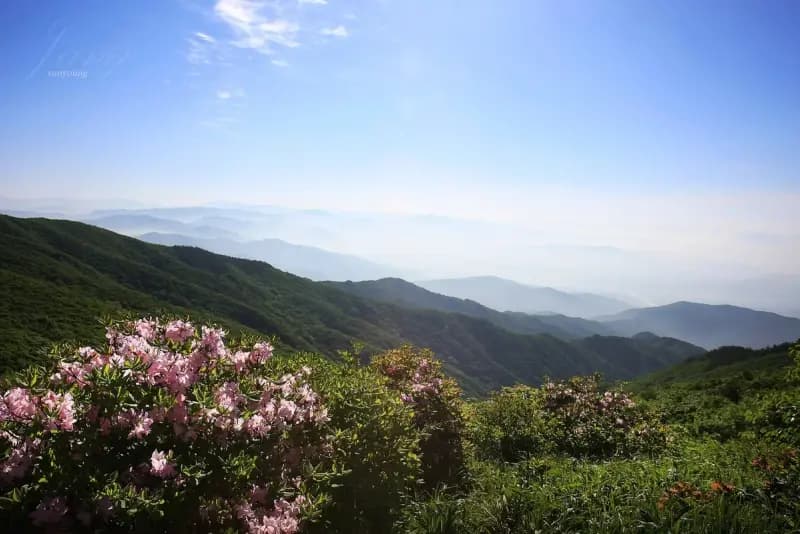
EasyHwangmaesan Hiking Guide: Azalea Plateau and Summit
A practical guide to hiking Hwangmaesan — Korea's most accessible alpine plateau with one million pink royal azaleas in May and silver grass fields in October.
Same region
EasyJuwangsan Hiking Guide: Tuff Cliffs and Jusanji Pond
A practical guide to hiking Juwangsan National Park — a UNESCO Global Geopark with volcanic tuff cliffs, three valley waterfalls, and willow-lined Jusanji Pond.
Same region
ModeratePalgongsan Hiking Guide: Gatbawi Buddha and Summit
A practical guide to hiking Palgongsan National Park near Daegu — the Gatbawi stone Buddha pilgrimage, Donghwasa route to Birobong summit, and how to get there.