Cheonggyesan Hiking Guide: Routes and Waterfalls
A practical guide to hiking Cheonggyesan near Seoul — the Wonteogol valley route, ridge traverse to 618m, hidden waterfalls, and subway access from Gangnam.
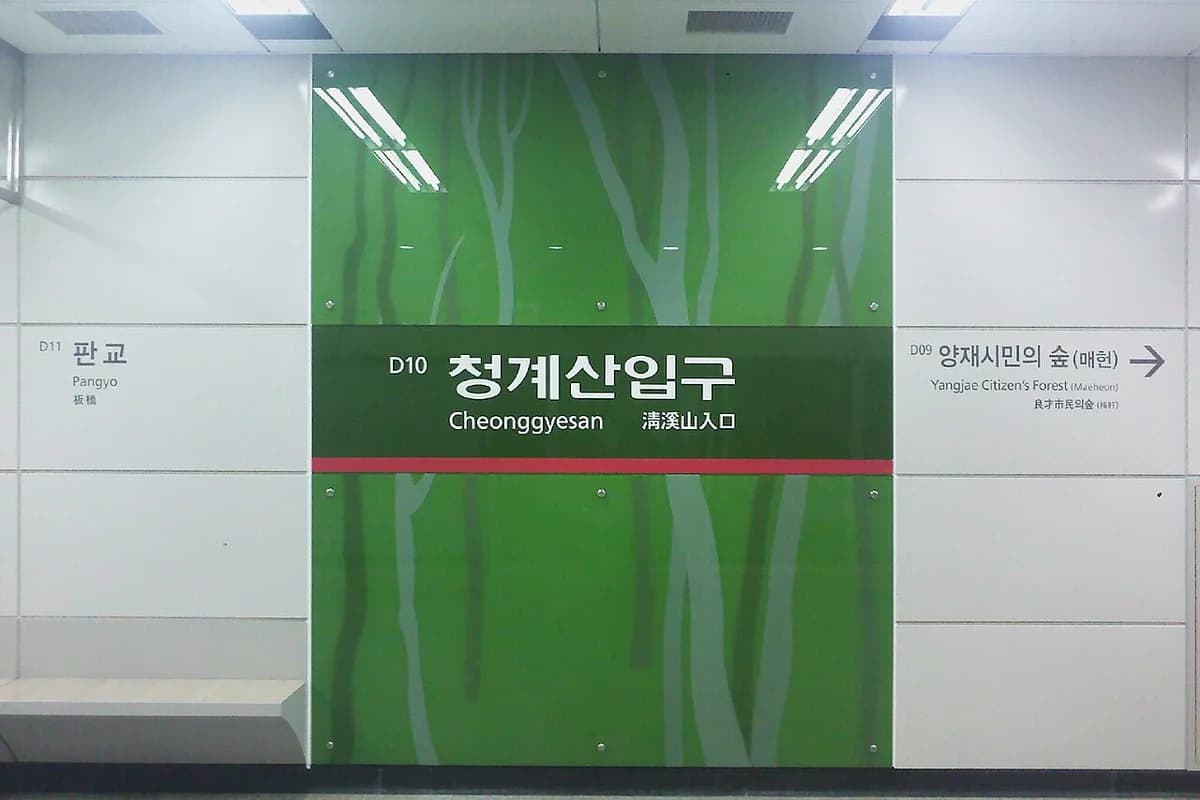
Cheonggyesan sits 18 kilometers southeast of central Seoul, straddling the boundary between Seocho-gu and Gyeonggi Province. At 618 meters, the mountain is accessible from Gangnam and southern Seoul in under 40 minutes by subway — making it the most convenient moderate hike for the southern half of the city and the default weekend option for residents of Seocho, Gangnam, and Seongnam.
The name means "Clear Stream Mountain," and the geology explains why. Unlike Seoul's northern peaks — Bukhansan and Dobongsan, which are granite — Cheonggyesan is composed of gneiss, a metamorphic rock that weathers more evenly and retains moisture better in its valleys. The result is thicker soil coverage, denser forest canopy, and a network of streams and natural springs that flow year-round. The Wonteogol Valley approach follows one of those streams from the base, passing mineral springs historically considered medicinal and waterfalls tucked into side valleys.
The mountain's cultural layer runs deeper than its geology. Cheonggyesan served as a retreat for scholars and loyalists during Korea's most turbulent political transitions. The Joseon scholar Jung Yeo-chang (1450-1504) retreated to Isubong peak to escape the Muo political purge, and the renowned calligrapher Chusa Kim Jeong-hee (1786-1856) withdrew here after years of exile. The summit, Mangyeongdae, carries the legend of a Goryeo loyalist named Zo Yun who climbed to this spot after the dynasty fell to gaze toward the distant former capital and weep.
It will not test your limits. That is exactly the point.
Quick Info
Quick summary for planning your Cheonggyesan hike at a glance.
- Location: Seocho-gu, Seoul / Seongnam / Gwacheon / Uiwang border, South Korea
- Highest Point: Mangyeongdae, 618m
- Difficulty: Easy to Moderate (route-dependent)
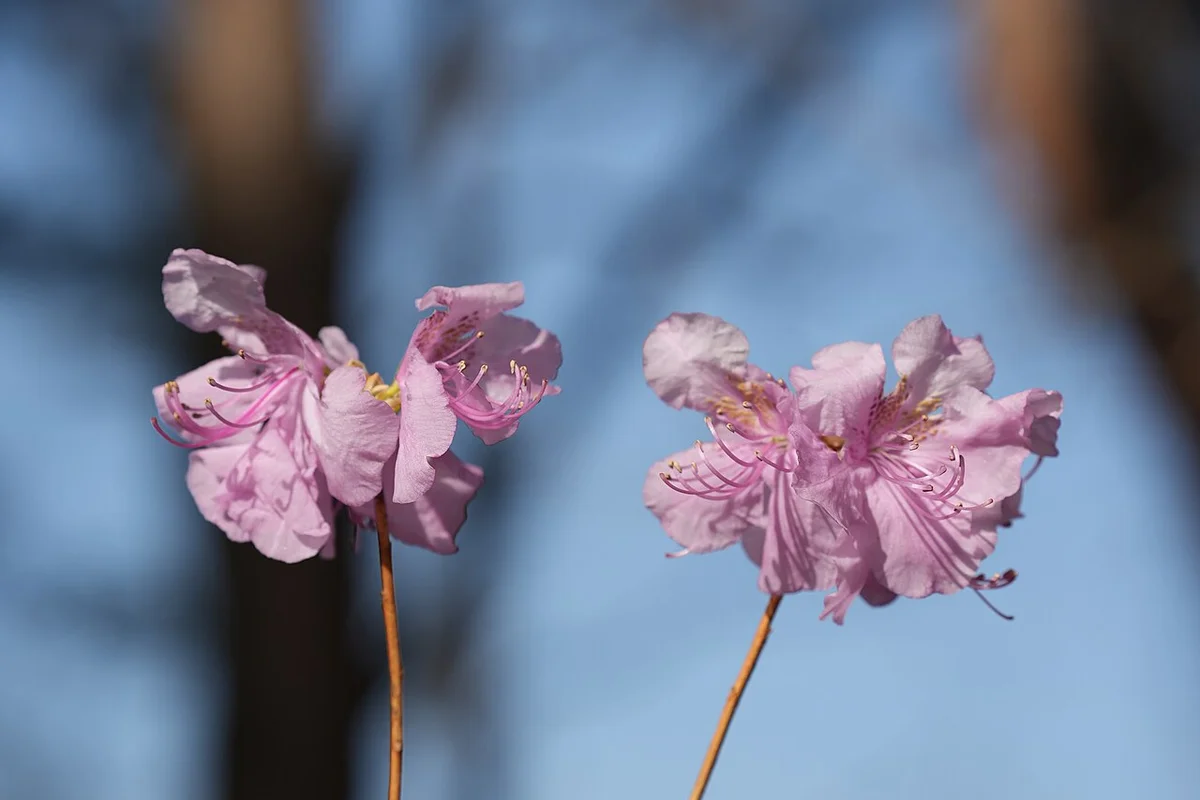
- Best Time to Visit: April–June (spring), October–November (autumn)
- Entrance Fee: Free
- Nearest Station: Cheonggyesan-ipgu Station (Shinbundang Line, Exit 2)
- Travel Time from Gangnam: 20–30 minutes
Trail Overview
| Trail | Distance | Elevation Gain | Time | Difficulty | Best For |
|---|---|---|---|---|---|
| Wonteogol Route | 3–4km one-way | ~300m | 1.5–2h up | Easy–Medium | Families, first-timers, Gangnam visitors |
| Yeotgol Route | 4–5km one-way | ~335–365m | 2–2.5h up | Medium | Quieter trails, temple visit |
| Full Ridge Traverse | 8km loop | ~640m | 4–5h | Medium–Hard | All peaks, panoramic views |
| Waterfall Route (Gwacheon) | 6–7km | ~490m | 3–4h | Medium–Hard | Hidden waterfalls, off-trail sections |
Why Cheonggyesan Is Worth the Trip from Gangnam
Most Seoul hiking guides send visitors north toward Bukhansan or Dobongsan. For anyone based in Gangnam, Seocho, or Seongnam, that is a 60 to 90 minute transit commitment. Cheonggyesan is 20 to 30 minutes from Gangnam by Shinbundang Line — and it offers a genuinely different experience from the granite northern peaks.
The gneiss bedrock creates conditions you will not find on Bukhansan or Dobongsan. The soil is deeper, the canopy is thicker, and the streams are more persistent. Where the northern mountains present exposed rock faces and fixed-rope scrambles, Cheonggyesan offers a forested, stream-following character closer to a countryside trail than an urban mountain hike. The natural springs along the Wonteogol route — including the Wonteogol Mineral Spring roughly 20 minutes from the trailhead — produce cold, clear water that hikers still drink directly.
The ridge traverse visits a series of peaks with historical associations — Isubong (545m) is named for Jung Yeo-chang, the Joseon scholar who retreated here in the late 15th century to escape a political purge, and the true summit Mangyeongdae (618m) carries the legend of the Goryeo loyalist weeping toward the lost capital. Cheonggyesa Temple, located on the Uiwang side of the mountain, has approximately 500 years of continuous history and is associated with Udambara flower symbolism in Korean Buddhist tradition.
The mountain also once bore the name Cheongyongsan (靑龍山) — "Blue Dragon Mountain" — from a legend in which a blue dragon ascended to heaven from its slopes. The dragon imagery connects to the water: the streams that define the mountain's character are also, in Korean folk tradition, the domain of the dragon.
The ecological value is significant for an urban-fringe mountain. The streams and wetlands support the narrow-mouthed toad (맹꽁이), designated Endangered Wildlife Grade II — an indicator species whose presence confirms healthy wetland ecology in a metropolitan area of over 10 million people. The forest composition includes Korean pine, linden, and several oak species, with wild chestnut, acorn, wild grape (meoru), and akebia vine in the understory.
For the closest comparison from the northern side of the city, Gwanaksan offers similar forested character with more technical terrain. For easier options, Namsan or Achasan require less commitment.
Difficulty and Time Required
Cheonggyesan is one of Seoul's most accessible moderate hikes — genuinely suitable for families with older children on the Wonteogol route, and manageable for most adults in reasonable fitness on the Yeotgol approach. The full ridge traverse requires more sustained effort but involves no technical scrambling or fixed ropes. It is the right mountain for visitors who want a proper half-day in the mountains without the preparation requirements of Bukhansan or Suraksan.
The Wonteogol route gains approximately 300 meters of elevation over 3 to 4 kilometers, with roughly 40 percent of the ascent on wooden staircases and another 40 percent on packed earth trail. The upper sections steepen noticeably after the Kkaldak Ridge junction, but the gradient is manageable for anyone who walks regularly. The full ridge traverse accumulates roughly 640 meters of total elevation gain over 8 kilometers, visiting every major peak from Isubong through Mangyeongdae and back down via Wonteogol.
The Yeotgol route gains 335 to 365 meters over 4 to 5 kilometers, with a longer but more varied approach that includes military road sections, multiple springs, and the historic Jeongto-sa Temple. The waterfall route via Gwacheon accumulates approximately 490 meters of total gain over more demanding terrain.
In winter, ice forms on the wooden staircases and upper ridge sections. Crampons or microspikes are recommended above the mid-elevation zone from December through February. The Wonteogol stairs can be particularly treacherous when frozen.
Trail Options
Wonteogol Route — Most Popular
The Wonteogol approach is the standard Cheonggyesan experience. From Cheonggyesan-ipgu Station (Shinbundang Line, Exit 2), walk 10 to 15 minutes to the trailhead. The path follows the Wonteogol Valley stream from the base, passing a natural mineral spring before climbing via wooden stairs and packed earth trail to Ogyeobong and Maebong.
Lower section — Valley floor to Kkaldak Ridge
The first kilometer follows the stream through dense forest. The Wonteogol Mineral Spring is roughly 20 minutes from the trailhead — cold, clear water that most hikers drink directly. The gradient is gentle and the canopy provides full shade, making this one of the most comfortable summer morning hikes in the Seoul area.
Mid section — Kkaldak Ridge to Ogyeobong
The trail steepens after the ridge junction. Wooden staircases carry most of the elevation gain through this section. A helicopter landing pad serves as a useful intermediate viewpoint before the final approach to Ogyeobong (580 meters).
Upper section — Maebawi to Maebong
Near the upper section, Maebawi (Hawk Rock) and Dolmunbawi (Stone Gate Rock) are distinctive gneiss formations worth a brief stop — Maebawi named for its hawk-like profile, Dolmunbawi for its arch shape that serves as a natural frame for photographs. The summit plateau at Maebong gives views south toward Gwacheon and north toward the Gangnam skyline.
Round trip: approximately 2.5 to 3 hours. Suitable for families with children aged 8 and above.
Best for: First-time visitors to Cheonggyesan, Gangnam-based visitors, families, morning hikes.
Yeotgol Route — Quieter Alternative
The Yeotgol approach from Seongnam-side is noticeably less crowded than Wonteogol on weekends. The trail passes Jeongto-sa Temple before climbing through forest with multiple mineral springs along the route — the Dongja Spring and Yakcho Stream Spring provide reliable cold water at intervals. The path is less well-maintained than Wonteogol but more varied — forest floor, occasional asphalt military road sections, and stream crossings in wet season. The route climbs through the Hyeol-Eup Pass before reaching the ridgeline.
This route connects naturally to the full ridge traverse and is the better starting point for anyone planning to walk all the major peaks in sequence.
Best for: Those seeking quieter trails, repeat visitors, anyone combining with the full ridge traverse.
Full Ridge Traverse — Best Complete Experience
The full traverse follows the north-south ridge from Isubong (545 meters) through Guksabong (540m), Seokgibong (595m), Mangyeongdae (the true summit at 618 meters), and Maebong before descending via Wonteogol. This 8-kilometer loop visits all the major peaks and provides the best panoramic views — Mangyeongdae in particular looks north across Gwacheon toward central Seoul on clear days.
The historical associations deepen the traverse. Isubong is named for Jung Yeo-chang, the 15th-century Joseon scholar who retreated here to escape the Muo political purge — his student Jung Gu later named the peak in his honor. Mangyeongdae carries the legend of a Goryeo official named Zo Yun who climbed here after the dynasty fell to gaze toward the distant capital and weep. Guksabong (540m) offers a sharp ridgeline with direct sightlines toward Seoul. The names are woven into the landscape rather than commemorated separately — the peaks themselves are the historical record.
Allow 4 to 5 hours with stops. No technical scrambling required.
Best for: Those wanting the full Cheonggyesan experience, history interest, visitors with a full morning to spend.
Waterfall Route — Off-Trail Option
The Gwacheon approach via Yangjae and down toward Gangmaepokpo and Sujong Waterfall covers 6 to 7 kilometers and includes two hidden waterfalls not on the standard trail maps. Gangmaepokpo has no marked path — route-finding is required and the section is not recommended without previous mountain navigation experience. Sujong Waterfall, located nearby, is considered the more impressive of the two.
Best for: Experienced hikers comfortable with unmarked terrain, waterfall photography. Summer after heavy rain provides the most dramatic water flow at both waterfalls.
Best for Most Travelers
If you have a half-day and are based in southern Seoul: Wonteogol route up and back. Two and a half to three hours round trip, the best spring-fed stream walking in the Gangnam area, and a summit view from Maebong that puts the city in perspective. Take the Shinbundang Line to Cheonggyesan-ipgu Station, walk 10 minutes, and you are on the trail. No permits, no preparation beyond comfortable footwear.
If you have a full morning and want the complete mountain: Yeotgol up, ridge traverse through Mangyeongdae, Wonteogol down. Four to five hours, every major peak, and the historical depth that makes Cheonggyesan more than a fitness exercise. Start by 8am on autumn weekends to avoid crowds on the upper sections.
If you are comparing Cheonggyesan to other Seoul options: the Wonteogol route is easier than Bukhansan's Baegundae and more forested than Dobongsan. It is harder than Namsan or Achasan, but without the technical rope sections of Suraksan. For visitors staying in Gangnam, it is the clear first choice by transit time alone.
Who Should Do This Hike
Cheonggyesan is the right mountain for visitors based in southern Seoul who want more than a city park walk but are not ready for the technical demands of Bukhansan or Suraksan. The Wonteogol route is family-friendly and accessible to most fitness levels. The full ridge traverse suits anyone who wants a proper half-day mountain experience with historical depth.
The mountain does not have the dramatic granite faces or fixed rope sections of the northern peaks — visitors specifically looking for technical scrambling should consider Dobongsan or Suraksan instead. But for a forested, stream-following, historically layered hike within easy reach of Gangnam, Cheonggyesan has no direct equivalent among Seoul's accessible mountains.
Tips Before You Go
- The Wonteogol Mineral Spring is safe to drink and provides reliable cold water on the ascent — bring a refillable bottle rather than carrying everything from the start.
- Bring at least 1.5 liters of water for the full ridge traverse. The springs are on the lower sections; nothing is reliable above Kkaldak Ridge.
- Wooden staircases on the upper Wonteogol sections become slippery after rain. Take care on descent particularly.
- The Gangmaepokpo waterfall route has no marked trail — do not attempt it without navigation experience and offline maps.
- In winter, crampons are recommended for icy sections on the upper ridge. The wooden stairs can be particularly dangerous when frozen.
- Start the full ridge traverse by 8am on autumn weekends to avoid crowds on the upper sections.
- Air quality affects visibility significantly. Check the AQI before planning a ridgeline hike — autumn and winter generally offer the clearest skies.
- The mountain straddles four administrative areas (Seocho-gu, Seongnam, Gwacheon, Uiwang), so trail maps from different districts may show different sections. Naver Maps provides the most complete coverage.
- Emergency number: 119. Tourist hotline: 1330 (English available).
How to Get There
From Cheonggyesan-ipgu Station (Shinbundang Line, Exit 2 — main approach): Walk approximately 10 to 15 minutes east to the Wonteogol Valley trailhead. The Shinbundang Line connects directly from Gangnam Station — total travel time from Gangnam is approximately 20 to 30 minutes.
From Yangjae Station (Line 3 / Shinbundang Line — southern approach): Access to the Gwacheon waterfall route via the Yangjae area. Allow 15 to 20 minutes walk to the trailhead.
From Seongnam (Yeotgol approach): Access the Yeotgol trailhead from the Seongnam Sujeong-gu side. Parking is available but limited. This approach offers the quieter trail with Jeongto-sa Temple.
Use Naver Maps for real-time routing on the day.
Final Thoughts
Cheonggyesan is the natural first choice for Seoul hiking when you are staying in or near Gangnam. The Wonteogol approach via the Shinbundang Line is one of the more efficient transit-to-trailhead connections in the city, and the forested valley character of the lower trail is a genuine contrast to the rocky northern peaks. For a full day, the ridge traverse to Mangyeongdae and back covers meaningful ground without requiring technical preparation.
The mountain carries more history than its modest height suggests. Joseon scholars retreated here to preserve their integrity during political purges; Goryeo loyalists climbed to its summit to grieve a fallen dynasty; a 500-year-old temple maintains continuous Buddhist practice on its eastern slopes. These layers are not signposted — they are embedded in the peak names themselves. Walking the ridge from Isubong to Mangyeongdae is walking through centuries of Korean political and spiritual history.
If you're planning multiple hikes in Seoul, start with the full guide: Best hikes in Seoul — all mountains by difficulty and subway access
Related Guides
Explore more hiking in Seoul:
- Best hikes in Seoul — full overview by difficulty and subway access
- Gwanaksan Hiking Guide — forested southern Seoul, more technical
- Bukhansan Baegundae Hiking Guide — Seoul's highest summit
FAQ
Is Cheonggyesan a good hike for beginners? Yes. The Wonteogol route is one of Seoul's most beginner-friendly mountain hikes — well-maintained trail, natural springs, and a round trip of 2.5 to 3 hours. Suitable for families with children aged 8 and above in proper footwear.
How do I get to Cheonggyesan from Gangnam? Take the Shinbundang Line from Gangnam Station to Cheonggyesan-ipgu Station (Exit 2). Walk 10 to 15 minutes to the Wonteogol trailhead. Total travel time is approximately 20 to 30 minutes.
What is the best route on Cheonggyesan? For first-time visitors, the Wonteogol route is the standard choice — easiest access, natural springs, and the most popular trail. For a full day, the ridge traverse from Yeotgol through Mangyeongdae and down via Wonteogol gives the complete experience.
How long does it take to hike Cheonggyesan? The Wonteogol route takes 2.5 to 3 hours round trip. The Yeotgol route takes 3 to 4 hours. The full ridge traverse takes 4 to 5 hours including stops.
What is Mangyeongdae on Cheonggyesan? Mangyeongdae is the true summit of Cheonggyesan at 618 meters. The name translates roughly as "viewing platform where one wept for the lost capital," associated with a Goryeo official who climbed here after the dynasty fell to gaze toward the distant former capital.
What is the best time to visit Cheonggyesan? April to June for spring wildflowers and mild temperatures. October to November for autumn foliage and clear skies. Winter requires crampons on icy upper sections.
Continue exploring Korea's mountains
More routes, same honest field notes.
Related guides
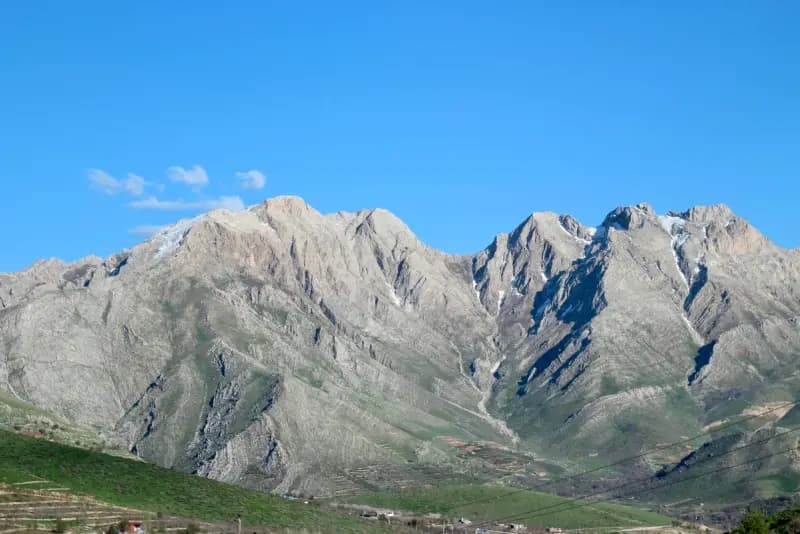
Nearby hikes
ModerateBulamsan Hiking Guide: Granite Ridge and Azaleas
A practical guide to hiking Bulamsan in northeast Seoul — the Sanggye route, Hwangangdae technical scramble, spring azaleas, and how to get there by subway.
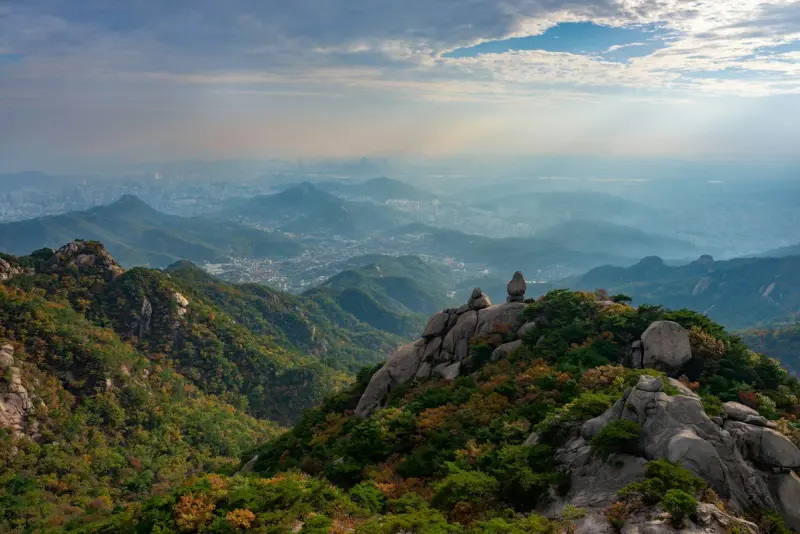
Nearby hikes
HardBukhansan Hiking Guide: Baegundae Summit in Seoul
A practical guide to hiking Bukhansan National Park in Seoul — Baegundae summit routes, Bukhansanseong Fortress, Insubong rock climbing, and subway access.
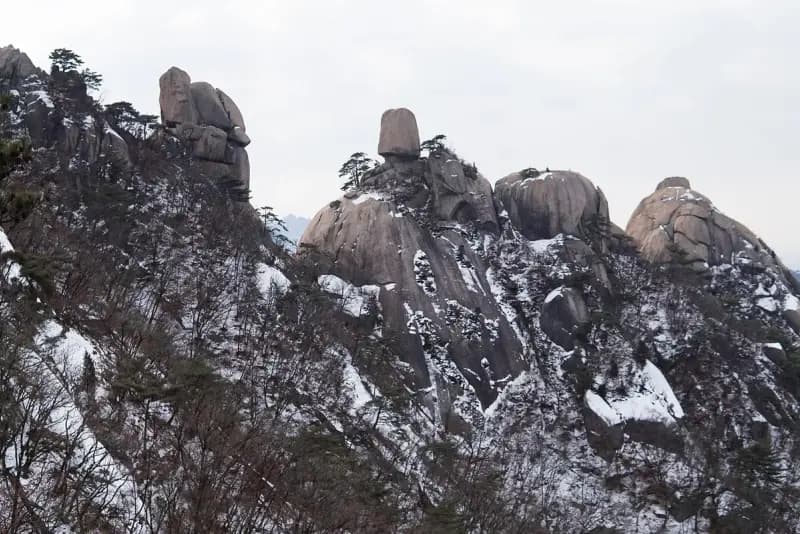
Nearby hikes
HardDobongsan Hiking Guide: Sinseondae and Obong Ridge
A practical guide to hiking Dobongsan in Seoul — the Sinseondae sunrise summit at 739.5m, Obong Five Peaks ridge traverse, and subway access from central Seoul.