Yongmunsan Hiking Guide: Ancient Ginkgo and Summit
A practical guide to hiking Yongmunsan near Yangpyeong — the Yongmunsa Temple route, the 1,100-year-old ginkgo tree, autumn foliage timing, and Seoul access.
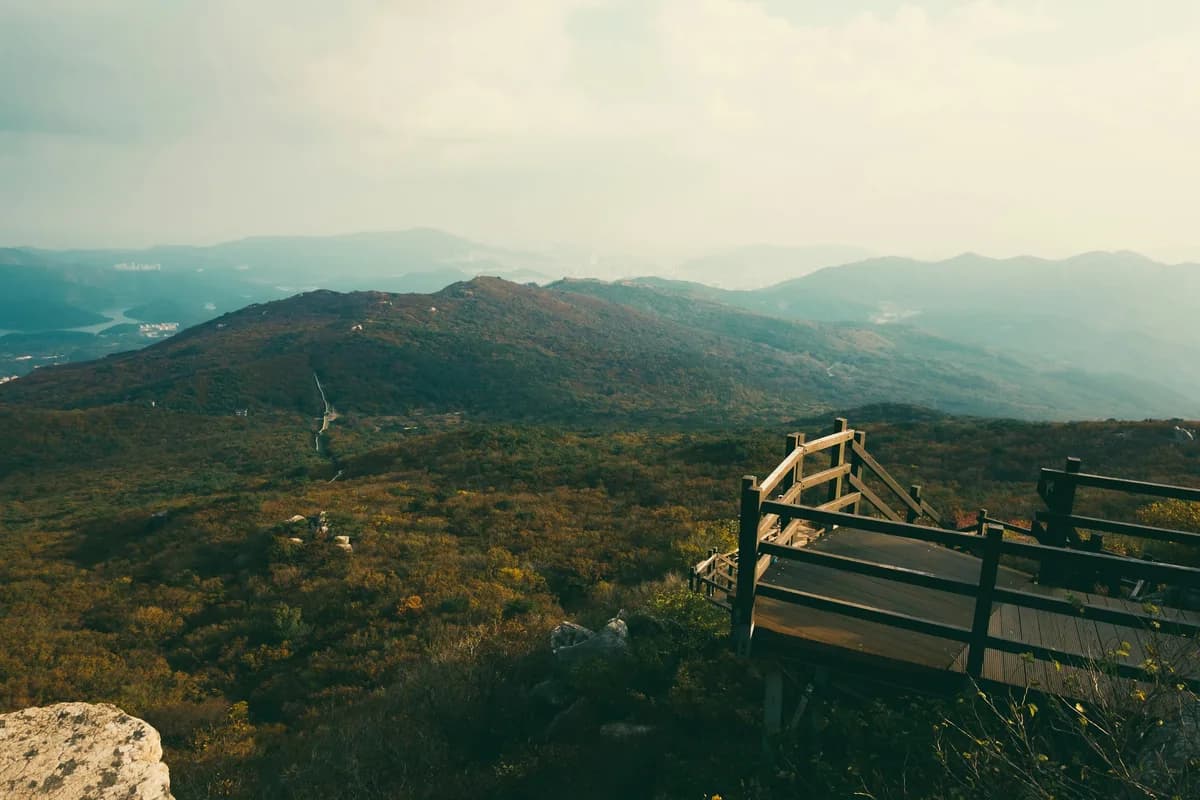
Yongmunsan rises to 1,157 meters in Yangpyeong County, Gyeonggi Province — roughly 40 kilometers northeast of Seoul. The name means "Dragon's Gate Mountain," and the valleys that cut through its granite flanks are said to resemble the passage a dragon would take from water to sky. At 1,157 meters, it is the fourth-highest mountain in Gyeonggi Province and the closest peak above 1,000 meters to central Seoul.
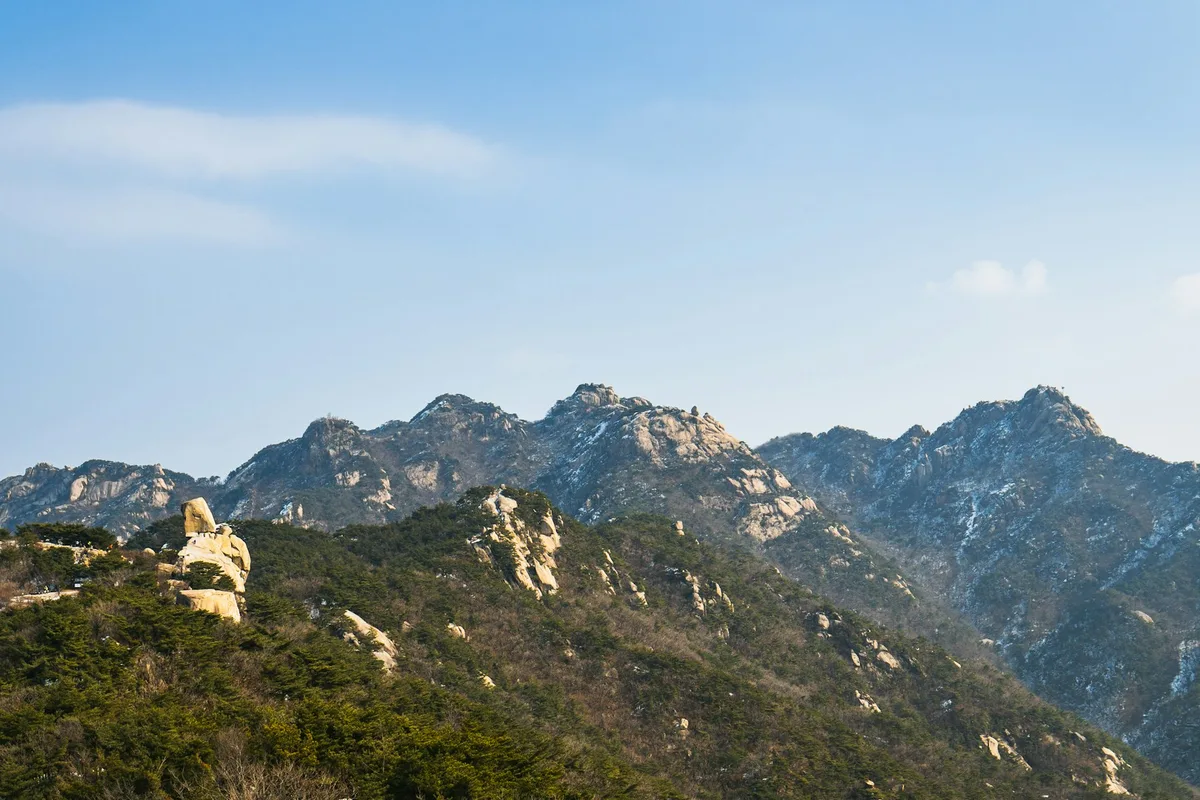
The mountain is built on granite and granodiorite from the Cretaceous period, approximately 100 million years old. The exfoliation of this granite — sheet jointing caused by tectonic pressure and erosion — has produced the landscape that historically earned comparisons to Geumgangsan (Diamond Mountain): knife-edge ridges, vertical rock walls, and deep valleys with clear-running streams. The rock formations along the main trail — Madangbawi (a broad flat slab used as a natural rest platform), Unpiram (a vertical cliff face resembling a brushstroke), and Yongakam (a formation shaped like a dragon's foot) — are the surface expression of this geology.
The cultural layer runs deeper than the granite. Yongmunsa Temple was founded in 913 CE by the monk Daegyeong and rebuilt in 1395 during early Joseon by Joanhwasang. The temple holds two Treasures: the stupa and stele of the monk Jeongjiguksa (Treasure No. 531), composed by the literatus Gwon Geun, and a gilt-bronze Avalokitesvara statue from the 14th century (Treasure No. 1790). Above the main temple complex, the smaller Sangwonsa sits on the upper slopes. But the mountain's most famous feature stands at the temple entrance: a 1,100-year-old ginkgo tree, 42 meters tall with a trunk circumference of 15.2 meters — the largest and oldest ginkgo in East Asia, designated Natural Monument No. 30 in 1962.
The hiking itself is granite ridge work — sharp rock formations, exposed scrambling on the upper sections, and deep valleys with clear water running through old-growth forest. The Yongmunsa route to Gaseupbong summit takes roughly 3 to 3.5 hours ascending and is the most popular approach. During the Joseon Dynasty, the ginkgo tree was granted the rank of dangsgwan — a senior court official at the third rank — by King Sejong, reflecting the reverence this tree commanded even centuries ago.
Quick Info
Quick summary for planning your Yongmunsan hike at a glance.
- Location: Yangpyeong-gun, Gyeonggi Province, South Korea
- Highest Peak: Gaseupbong, 1,157m
- Difficulty: Moderate to Moderate-Hard (route-dependent)
- Best Time to Visit: Late October-mid November (ginkgo foliage), April-June (spring)
- Entrance Fee: Free (tourist site access)
- Nearest Station: Yongmun Station (Jungang Line / Gyeongui-Jungang Line)
- Travel Time from Seoul: 60-90 minutes by train
- National Tourist Site: Designated May 20, 1971; managed infrastructure since 1983
Trail Overview
| Trail | Distance | Elevation Gain | Time | Difficulty | Best For |
|---|---|---|---|---|---|
| Yongmunsa Route (Course 1) | 7-8km round trip | +680m | 3-3.5h up | Moderate | Temple, ginkgo tree, summit |
| Ridge Route (Course 2) | 6-7km round trip | +660m | 2.5-3h up | Moderate | Views, faster summit |
| Jungwon Traverse | 12-15km | +900m | 5-7h | Hard | Full ridge, waterfall, experienced hikers |
Why Yongmunsan Is Worth the Trip from Seoul
Most hikers heading east from Seoul go straight to Gangwon Province — Seoraksan or Chiaksan. Yongmunsan sits closer, in the transitional zone between Seoul's suburban edge and the deeper mountains, and offers something neither Seoul's peaks nor the national parks provide: a genuine 1,000-meter summit within 90 minutes of the city center by train.
The granite here produces a landscape that earned comparisons to Geumgangsan — knife-edge ridges, vertical rock walls, and deep valleys with clear-running streams. The rock was formed during the Cretaceous period and has been shaped by millions of years of exfoliation and water erosion. The stability of granite means landslide risk is relatively low, but the polished surfaces become dangerously slippery when wet, and frost wedging on the upper ridges creates rockfall potential in spring after freeze-thaw cycles.
The cultural layer runs deep. Yongmunsa Temple was founded in 913 CE and rebuilt in 1395 during early Joseon. It holds two Treasures: the stupa and stele of the monk Jeongjiguksa (Treasure No. 531), a late Goryeo-early Joseon figure whose memorial was composed by the literatus Gwon Geun, and a gilt-bronze Avalokitesvara seated statue from the 14th century (Treasure No. 1790), representing the pinnacle of Korean Buddhist sculpture technique from that period. But the ginkgo tree at the temple entrance is what most visitors come for — and during peak foliage, the golden canopy against the granite mountain behind it is one of the most photographed scenes in Gyeonggi Province.
The mountain also carries legends tied to Korean history. One tradition holds that Maui Taeja — the crown prince of Silla who refused to accept the kingdom's surrender to Goryeo in 935 CE — planted his walking staff here on his way to exile in Geumgangsan, and it grew into the ancient ginkgo. A second legend attributes the tree to the monk Uisang (625-702 CE), founder of the Hwaeom Buddhism tradition in Korea and builder of Buseoksa Temple, who is said to have left his staff at the temple where it took root.
For comparison, Bukhansan offers higher granite drama closer to Seoul but without the ancient temple complex. Chiaksan is a harder mountain with similar valley character but requires more travel time. Yongmunsan occupies the middle ground — meaningful elevation, accessible by train, and a cultural anchor that most Korean mountains lack.
Difficulty and Time Required
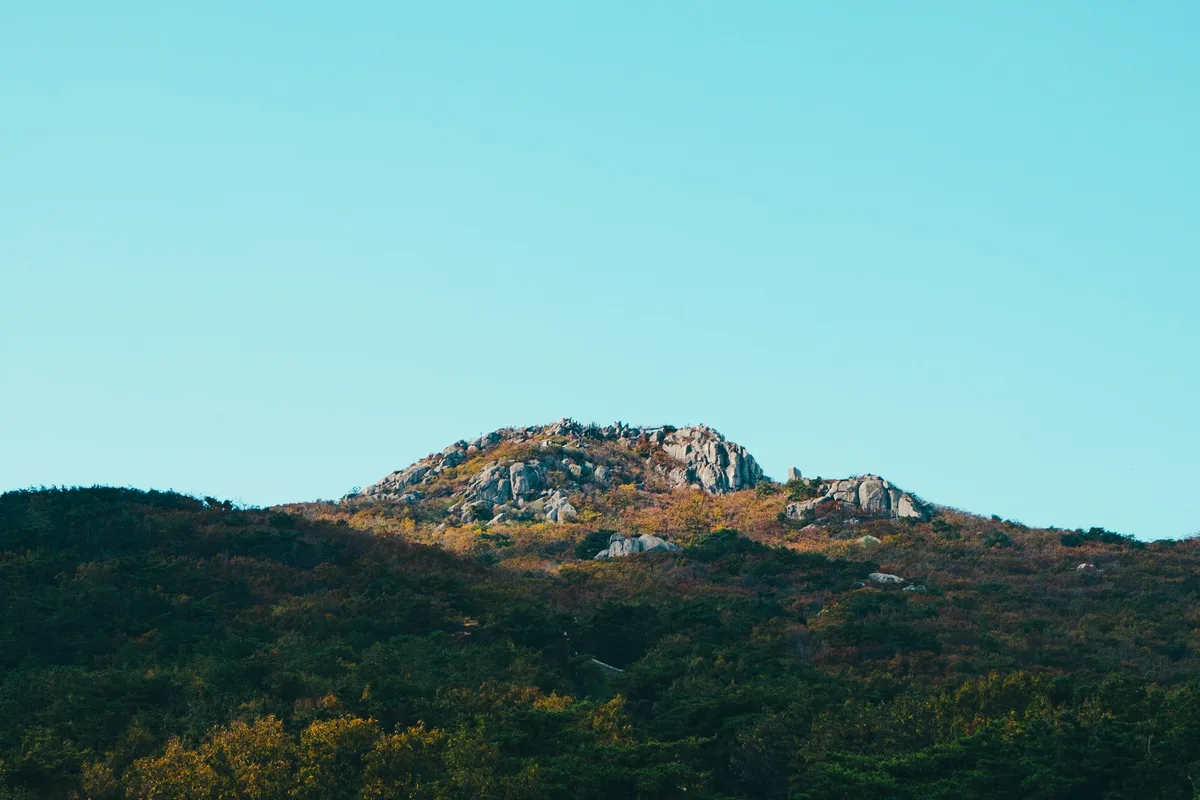
Yongmunsan is a moderate to moderately hard hike depending on the route. The Yongmunsa approach (Course 1) follows a valley through the temple complex, passes several rock formations, and climbs steadily through mixed forest to Gaseupbong summit at 1,157 meters. The gradient increases in the upper third, with exposed granite sections that require care in wet conditions. Most hikers complete the round trip in 6 to 7 hours including stops.
The elevation gain on the Yongmunsa route is approximately 680 meters from the tourist site entrance at roughly 500 meters elevation to the summit. The Ridge Route (Course 2) is shorter and offers better views throughout but with less variety — you trade the valley and temple section for a more direct ridgeline approach, gaining approximately 660 meters. The Jungwon Traverse is a serious full-day route for experienced hikers, covering 12 to 15 kilometers across the entire mountain with over 900 meters of elevation change and the Jungwon Waterfall as a highlight.
The granite surfaces become slippery when wet. The upper ridge sections are exposed to wind, and summit temperatures run roughly 7 to 8 degrees cooler than the trailhead. In winter, ice forms on the upper granite, and crampons are recommended above the mid-section.
Trail Options
Yongmunsa Route (Course 1) — Most Popular
The standard Yongmunsan experience. From the Yongmun Tourist Site entrance, the trail passes through Yongmunsa Temple, climbs past the rock formations, and reaches Gaseupbong summit.
Lower section — Tourist site to Yongmunsa Temple (1.5km, 30 min)
A gentle walk through the tourist area to the temple complex. Yongmunsa was founded in 913 CE by the monk Daegyeong and rebuilt in its current form in 1395 by Joanhwasang. The temple complex includes the Daeungjeon (main hall), Sanyeongak (mountain spirit hall), Chilseongak (seven stars hall), and a traditional tea room (dawon). In 1378, during the Goryeo period, the monk Jicheon transferred Buddhist sutras from Gyeongcheonsa Temple in Gaeseong to Yongmunsa, adding to its scriptural significance.
The 1,100-year-old ginkgo tree stands at the temple entrance — 42 meters tall, with a canopy spread of 28 meters in each direction. During the Joseon Dynasty, this tree was given the rank of a senior court official (dangsgwan, third rank) by King Sejong. It is enclosed by a protective barrier; observation and photography are permitted from the designated area. Do not touch the tree or cross the barrier — oils from human hands damage the bark, and root compaction from foot traffic threatens the tree's health.
Mid section — Temple to Madangbawi (2.5km, 1.5h)
The trail follows the valley stream through dense mixed forest. The gradient increases gradually. Janggun Yaksu — a mineral spring — provides drinking water along this section. Madangbawi, a broad flat granite slab roughly halfway up, serves as the primary rest point. The rock is large enough for dozens of hikers and offers open views across the Gyeonggi landscape.
Unpiram (a vertical cliff face) and Yongakam (a formation resembling a dragon's foot) are notable landmarks through this section.
Upper section — Madangbawi to Gaseupbong summit (3km, 1.5h)
The final third steepens considerably. The forest thins to sparse pine and exposed granite. The ridge narrows in places, with drop-offs that require attention. The summit at 1,157 meters provides panoramic views across Gyeonggi Province — on clear days, the visibility extends to the mountain ranges of Gangwon Province to the east.
Round trip: approximately 6 to 7 hours including stops. Suitable for adults in good fitness with proper footwear.
Best for: First-time visitors, anyone wanting the temple and ginkgo tree combined with a summit, autumn foliage season.
Ridge Route (Course 2) — Faster Summit
The ridge approach branches from the Yongmunsa trail and follows the southeast ridge directly to Gaseupbong. At 6 to 7 kilometers round trip and roughly 2.5 to 3 hours ascending, it is the shorter option with approximately 660 meters of elevation gain. The ridgeline offers continuous views but skips the valley floor and its rock formations.
The ridge is more exposed to sun and wind than the valley route, with less shade through the ascent. Some narrow sections have cliff drops on both sides, requiring steady footing and attention.
This route is suitable for intermediate hikers comfortable with sustained climbing on exposed granite. The trail is well-marked throughout.
Best for: Repeat visitors, those prioritizing views over valley scenery, time-limited hikers.
Jungwon Traverse — Full Ridge Experience
The long route starts from Bisolryeong Pass or Jungwon-ri and traverses the entire mountain via multiple peaks before descending to Gaseupbong. The 12 to 15 kilometer route follows a section of the Hanganggimaek — the ridgeline that divides the Han River watershed — and includes the Jungwon Waterfall (estimated 10 to 15 meter drop, best viewed in summer when monsoon rains increase flow) as a highlight.
The Jungwon Valley on the eastern side of the mountain is deeper and less developed than the main Yongmun Valley, with stronger current, colder water year-round, and good fish habitat. All valley streams from Yongmunsan eventually feed into tributaries of the Han River.
Allow 5 to 7 hours. This is a route for experienced hikers with navigation confidence and a full day to commit.
Best for: Peak-baggers, experienced hikers, those wanting the full Yongmunsan traverse.
Best for Most Travelers
If you are making a day trip from Seoul and want the full Yongmunsan experience: the Yongmunsa Route (Course 1) is the clear choice. It is the only route that combines the ginkgo tree, the temple complex, the rock formations, and the summit in a single hike. The valley approach through Yongmunsa provides cultural depth that the Ridge Route lacks, and the mid-trail landmarks — Janggun Yaksu mineral spring, Madangbawi's panoramic rest platform, the vertical face of Unpiram — break the climb into distinct stages that keep the hike varied across 6 to 7 hours.
If you have limited time or are visiting primarily for the ginkgo tree: the lower section from the tourist site to Yongmunsa Temple and back is a standalone walk of roughly 1 hour. This covers the temple grounds and the tree without requiring a summit attempt. Families with young children should consider this as the primary plan — the section from Yongmunsa to Madangbawi is manageable for older children, but the summit push involves exposed granite that is not suitable for young hikers.
For experienced hikers who have already done the standard route, the Ridge Route (Course 2) offers a faster summit with better continuous views and approximately 660 meters of gain. It pairs well with a descent via the Yongmunsa Route for variety.
Who Should Do This Hike
Yongmunsan suits hikers who want more elevation than Seoul's mountains offer without the 2 to 3 hour travel commitment to Gangwon Province. The Yongmunsa route combines genuine mountain hiking — 1,157 meters, exposed granite, and 6 to 7 hours of effort — with a cultural experience that few Korean mountains can match. The ginkgo tree and the temple complex give the lower sections a different character from the purely trail-focused approaches of Seoul's peaks.
The mountain is not suitable for casual walkers on the upper sections. The granite ridge requires proper footwear and reasonable fitness. Families with young children should plan the temple and ginkgo tree as a standalone visit — the section from Yongmunsa to Madangbawi is manageable for older children, but the summit push is a committed half-day effort.
During peak ginkgo season (late October to mid-November), the lower trail and temple area become very crowded on weekends. Arrive before 9am or visit on a weekday for a better experience.
Tips Before You Go
- The Janggun Yaksu mineral spring on the Yongmunsa route provides drinkable water, but carry at least 2 liters from the start. There are no water sources above the mid-section.
- The 1,100-year-old ginkgo tree is enclosed by a protective barrier. Do not touch the tree or cross the barrier. Photography is permitted from the designated viewing area. Do not remove fallen leaves — they serve an ecological function for the tree's root system.
- Wet granite on the upper ridge is dangerous. Avoid the summit sections after rain or during early morning frost. In spring, freeze-thaw cycles from winter can loosen rocks on steep sections — watch for rockfall.
- Hiking boots with ankle support are essential for the upper sections. The granite is sharp-edged and uneven.
- Peak ginkgo foliage runs approximately October 25 to November 15, with the best color typically in early November. The optimal photography window is 10am to noon when sunlight hits the canopy directly.
- Yongmunsan was designated a National Tourist Site in 1971. The tourist site at the base has parking for over 300 vehicles, restrooms, snack stands, and accommodation options.
- Yongmunsa Temple offers a templestay program (1-night 2-day or day programs) including meditation, temple cuisine, and dharma talks. Arrange in advance through the temple.
- The mountain is historically known for wild edible plants — dorajgi (bellflower root), deodeok (mountain root), gosari (fiddlehead fern), and gondrae — which were considered premium tributes to the Joseon royal court. Local restaurants near the trailhead specialize in these mountain vegetables (sannamul).
- Camping is prohibited on Yongmunsan.
- In winter, crampons are recommended for icy upper sections. Summit temperatures can drop well below freezing.
- Emergency number: 119.
How to Get There
From Seoul (train — recommended): Take the Gyeongui-Jungang Line from Yongsan Station or Cheongnyangni Station to Yongmun Station. Journey time is approximately 60 to 90 minutes. From Yongmun Station, take a local bus or taxi to the Yongmun Tourist Site entrance (approximately 15 minutes).
By car: Approximately 75km from central Seoul via Jungang Expressway, roughly 60 to 90 minutes depending on traffic. Parking is available at the tourist site (300+ vehicle capacity).
By bus: Express buses to Yangpyeong Bus Terminal from Dong Seoul Terminal, then local bus or taxi to the trailhead.
Use Naver Maps for real-time transit directions on the day.
Final Thoughts
Yongmunsan is the mountain where the trail itself is only half the reason to visit. The 1,100-year-old ginkgo tree at Yongmunsa Temple is the kind of natural monument that reframes the scale of the landscape — 42 meters of living history that has stood through the fall of Silla, the rise and fall of Goryeo, the entire Joseon Dynasty, and into the present. When it turns gold in early November, the mountain earns a visit on that alone.
The summit at 1,157 meters justifies the rest. The granite ridge work is satisfying, the valley approach through the temple complex adds depth, and the proximity to Seoul — 90 minutes by train — makes it a realistic day trip without the logistical overhead of a national park visit. The legends surrounding the ginkgo tree — whether planted by a Silla prince in exile or by the great monk Uisang — connect the hike to a thousand years of Korean history in a way that few trail experiences can.
For the best hikes reachable directly from Seoul by subway, see the full Seoul hiking guide.
Related Guides
Explore more hiking in Korea:
- Best hikes in Seoul — full overview of Seoul's mountains by subway
- Chiaksan Hiking Guide — national park, Gangwon Province
- Bukhansan Baegundae Hiking Guide — Seoul's highest summit
FAQ
How difficult is the Yongmunsan hike? The Yongmunsa route (Course 1) is rated Moderate with approximately 680 meters of elevation gain. The lower valley section is gentle, but the upper third involves sustained climbing on exposed granite ridge. The full round trip takes 6 to 7 hours. The Ridge Route (Course 2) is slightly shorter at 5 to 6 hours.
How do I get to Yongmunsan from Seoul? Take the Gyeongui-Jungang Line from Yongsan or Cheongnyangni Station to Yongmun Station (60 to 90 minutes). From the station, take a local bus or taxi to the trailhead (approximately 15 minutes).
When is the best time to see the ginkgo tree at Yongmunsa? The 1,100-year-old ginkgo tree turns golden from approximately October 25 to November 15. Peak color is typically in early November. The best photography light hits the canopy between 10am and noon.
Can I hike Yongmunsan as a day trip from Seoul? Yes. With a 7am departure from Seoul, the Yongmunsa route to Gaseupbong summit and back is achievable in a full day including train travel. Allow 8 to 9 hours total including transport and hiking.
What is the ancient ginkgo tree at Yongmunsa? It is a 1,100-year-old ginkgo tree standing 42 meters tall with a trunk circumference of 15.2 meters — the largest and oldest ginkgo in East Asia. Designated Natural Monument No. 30 in 1962, it is protected by a barrier. Legend attributes its planting to either a Silla prince or the monk Uisang.
What should I bring for hiking Yongmunsan? Hiking boots with ankle support for the granite ridge sections. At least 2 liters of water. Sun protection and a wind layer for the exposed summit. In winter, crampons are recommended for icy upper sections.
Continue exploring Korea's mountains
More routes, same honest field notes.